
The Hidden Brain Benefits of Chiropractic Care for Adults 55+

Last Updated on September 10, 2026
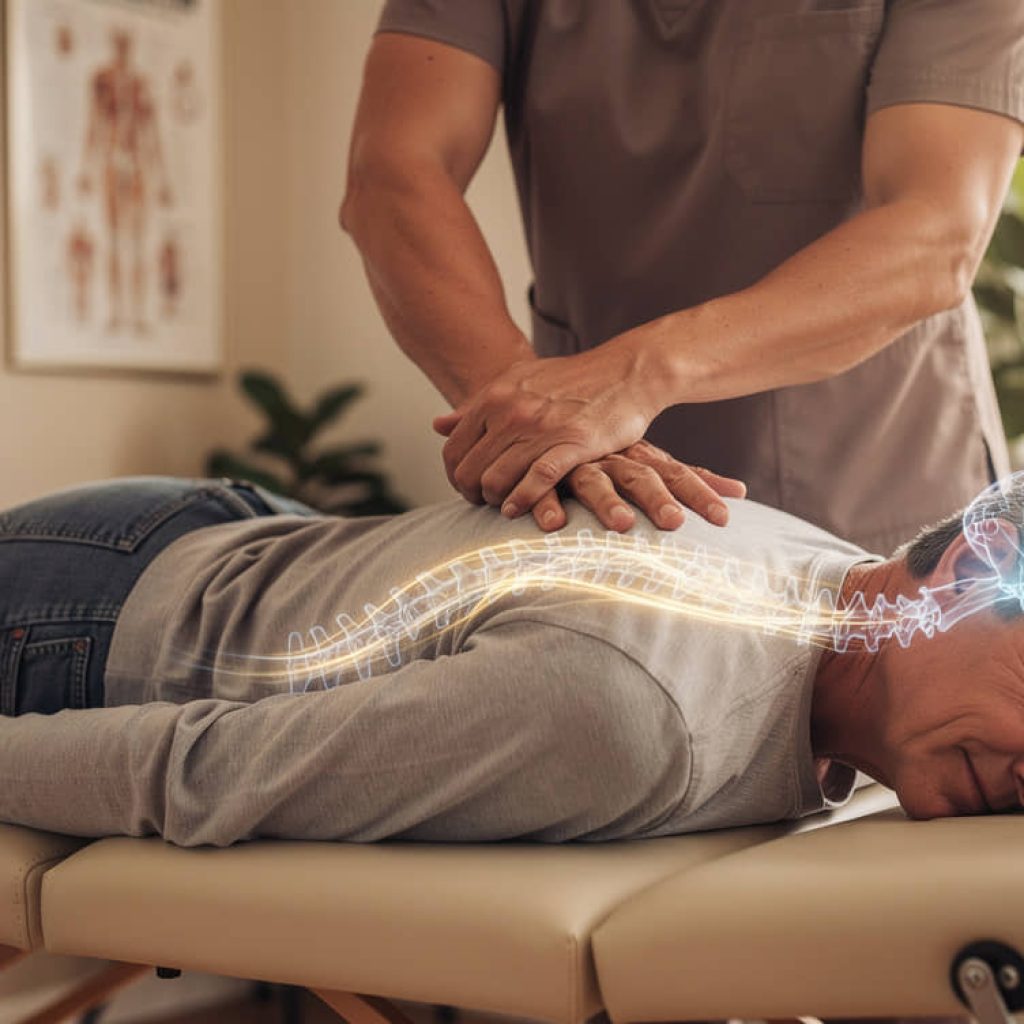
Most people think of chiropractic care as something you turn to when your back acts up. But new research published in Frontiers in Neurology suggests there’s far more going on during an adjustment than easing stiff joints. In fact, scientists are discovering that spinal manipulation may influence how the brain itself processes pain, movement, and even emotional balance!
For adults approaching or enjoying retirement, this is especially noteworthy: it means the benefits of chiropractic care may extend well beyond the spine.
The study reviewed ten separate clinical investigations into how spinal manipulation affects the brain. What researchers found was surprisingly consistent. After an adjustment, measurable changes occurred in several key brain regions, particularly the prefrontal cortex, the default mode network, and areas involved in sensory processing.
These aren’t obscure anatomical footnotes; they’re central hubs for decision‑making, emotional regulation, awareness, and pain interpretation.
One of the most compelling findings was the link between these brain changes and improvements in everyday life. Participants didn’t just report less pain. They also showed better physical function – things like walking, bending, and performing daily tasks and more stable emotional states.
Anxiety and low mood often accompany chronic pain, and the research suggests that spinal manipulation may help ease these burdens by influencing the brain regions that govern them.
For older adults, this matters. Chronic pain can chip away at independence, confidence, and quality of life. The idea that a hands‑on therapy could help restore not only comfort but also emotional steadiness and functional ability is encouraging. It reframes chiropractic care as a tool that supports the nervous system as a whole, not just the bones and muscles.
The researchers themselves highlight this broader impact. As the authors note: “Spinal manipulation therapies induce significant changes in brain activity and connectivity… correlated with improvements in clinical pain intensity, functional disability, and emotional states.”
This doesn’t mean chiropractic care is a treatment for mental health conditions, nor does it replace medical care. But it does suggest that spinal adjustments may help the brain operate more efficiently, especially in people dealing with long‑term pain. And that’s a meaningful shift in how we understand the value of spinal care!
If you’re curious about how chiropractic treatment might support your overall well‑being, this research is worth a closer look. You can read the full article here: https://www.frontiersin.org/journals/neurology/articles/10.3389/fneur.2025.1712320