
The Joy of Grandparenting: Nurturing Bonds Across Generations


Last Updated on September 10, 2026
Few things in life match the particular joy of becoming a grandparent. You bring a different kind of love to the role, one that’s calmer, less pressured, and grounded in experience you simply didn’t have the first time around.
But grandparenting today looks different from a generation ago. Families are more scattered, schedules are packed, and parenting styles have evolved. Navigating all of that, while staying genuinely connected to your grandchildren, takes some thought.
Here’s a practical look at how to nurture those bonds, support your family, and make this chapter genuinely rewarding for everyone involved.
The Role You Play in a Modern Family
Your relationship with your grandchildren offers something their parents simply can’t: perspective without pressure. You’ve raised children, survived the tough years, and come out the other side with hard-won wisdom and a longer view of what actually matters.
That’s not a small thing. Grandchildren who have close relationships with their grandparents tend to develop a stronger sense of identity and belonging. You’re part of what grounds them.
Talking with Your Adult Children First
The most important relationship in grandparenting isn’t with the grandchildren. It’s with their parents.
Clear, respectful communication with your adult children sets the foundation for everything else. Ask how you can help rather than assuming. Respect the parenting choices they’ve made, even when they differ from yours. And if you have concerns, raise them privately and gently, once, not repeatedly.
The goal is partnership, not oversight.
Activities That Actually Connect
The best grandparent-grandchild activities aren’t the expensive ones. They’re the repeated, unhurried ones: baking the same recipe together, watching a favourite film series, playing cards, working in the garden, walking the dog.
Some ideas by life stage:
- Young children: Shared reading, simple crafts, baking, nature walks, imaginative play
- Primary school age: Board games, cooking projects, local outings, following their sports
- Teenagers: Genuine conversation, learning something from them, taking their interests seriously
If distance separates you, regular short video calls work better than sporadic long ones. A weekly “just checking in” call of just 15 – 20 minutes builds the relationship more steadily than a two-hour catch-up once a month.
Sharing Your Stories and History
One of the great things grandparents carry is family history. Your grandchildren will one day want to know where they came from, and you’re the link to that.
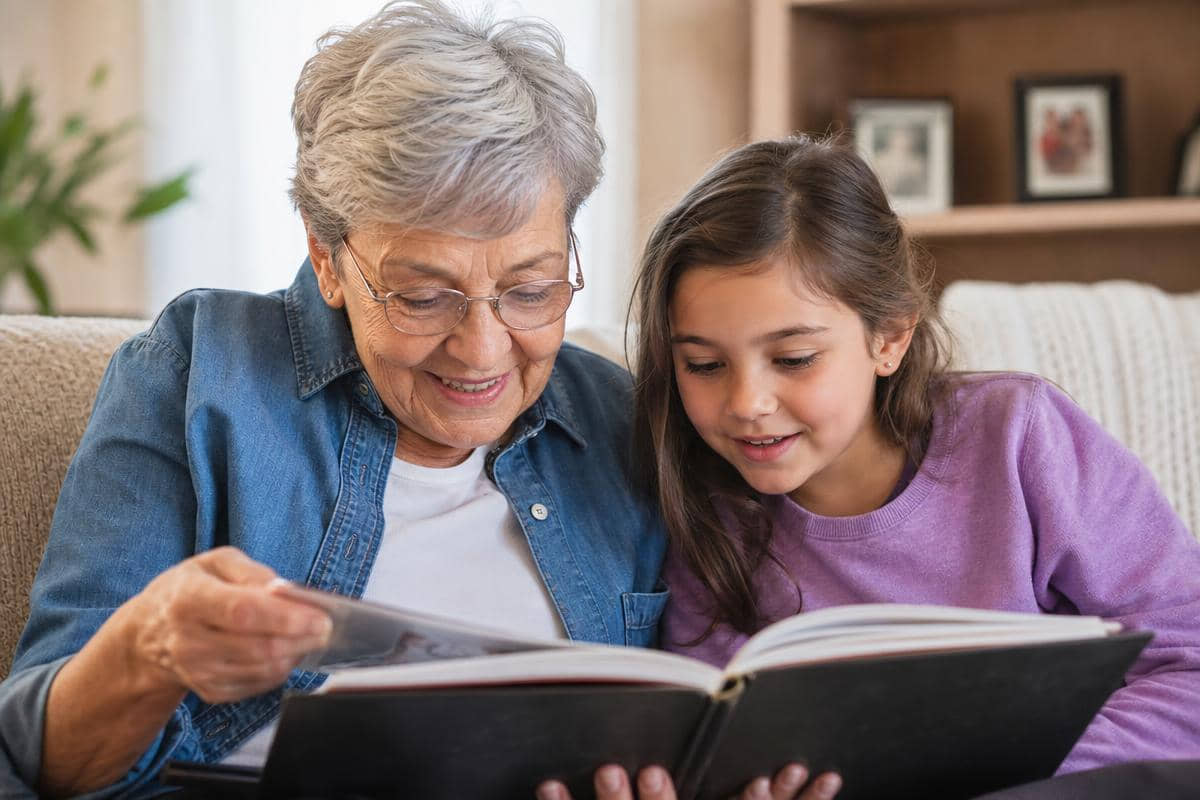
You don’t need to write a memoir. Even recording short audio or video stories, keeping a photo album with labels, or simply talking about your own childhood creates something lasting. What seems ordinary to you can be fascinating to a child who has never known a world without smartphones.
Offering Support Without Overstepping
There’s a fine line between being genuinely helpful and being overbearing. The best way to walk it is to offer rather than presume.
Offering to babysit, help with school holiday care, or run an errand is wonderful, if it’s asked for or clearly welcomed. Unsolicited parenting advice rarely lands well, no matter how well-intentioned it is.
Your emotional presence, the simple fact of being interested, consistent, and loving, is often more valuable than any practical help you can provide.
Q&A
How can I stay connected when I live far away?
Consistency matters more than frequency. A regular weekly video call, even a short one, builds the relationship more reliably than occasional big visits. Sending letters or small packages can also mean a lot, especially to younger children.
How do I offer advice without making my adult children feel judged?
Ask permission before offering your view. “Would it help to hear how we handled something similar?” leaves the door open without pushing through it. And if the advice isn’t welcomed, let it go gracefully.
My grandchildren are teenagers and seem disinterested. What actually works?
Teenagers often connect better when you’re doing something alongside them rather than having a face-to-face conversation. Ask about their interests with genuine curiosity and listen without judgment. The relationship you’ve built in earlier years usually reasserts itself, often when you least expect it.
The Long View
Grandparenting isn’t a performance. It’s a relationship, built slowly, through showing up consistently and being genuinely interested in the people your grandchildren are becoming.
The bonds you build now will outlast you. That’s as good a reason as any to invest in them thoughtfully.