5 Reasons a Cooking Class for Seniors is the Perfect Retirement Activity

Last Updated on September 15, 2026
Retirement marks a new chapter, full of opportunities to rediscover yourself and explore interests you’ve always wanted to pursue. If you’re wondering what meaningful activity might spark joy in your days, consider joining a cooking class designed for seniors. It’s an exciting, fulfilling pursuit with benefits that reach far beyond the kitchen.
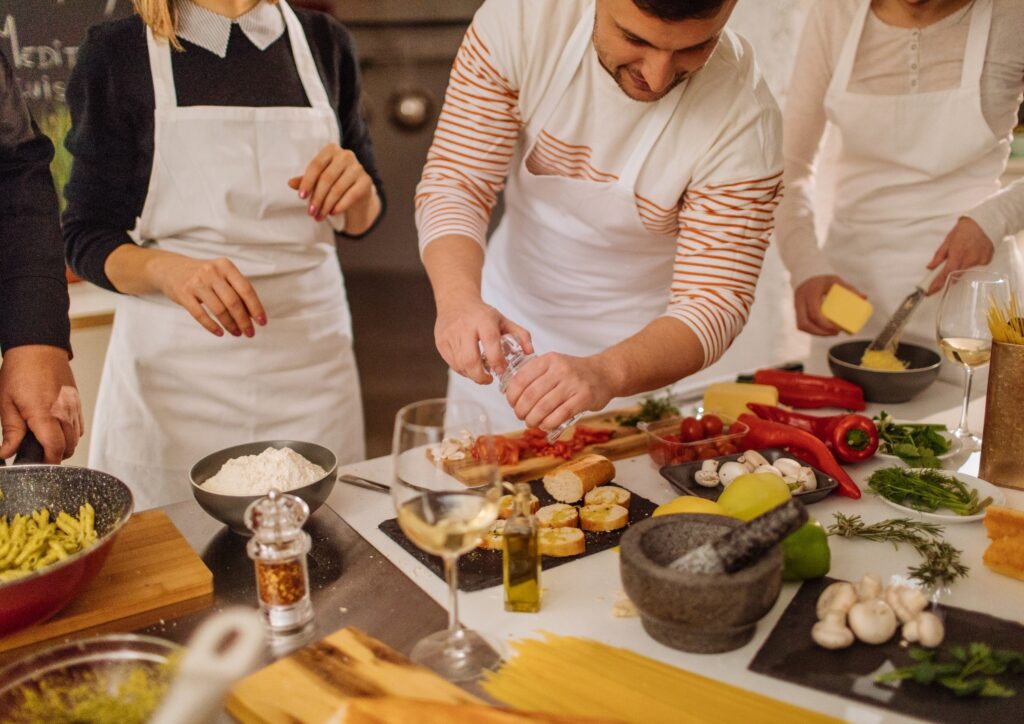
Why join a cooking class?
Cooking classes aren’t just about mastering recipes. They’re gateways to fun, learning, connection and personal growth. When retirement gives you the gift of time, a cooking class is a delightful way to invest it. Here are five reasons they’re such a fantastic choice at this stage of life.
1. Keeps your mind sharp
One of the biggest concerns as we age is staying mentally acute. After years of daily problem-solving at work, finding new ways to engage your brain becomes essential. A cooking class weaves together creativity, focus and the excitement of learning into one enriching activity.
Problem-solving: every time you step into the kitchen you’re exercising those muscles. Should you substitute honey for sugar? How do you adjust the seasoning for different tastes? These small decisions keep your mind active.
Memory: cooking is wonderful memory exercise as you recall recipe steps, spice combinations and timing sequences. Research shows continuous learning stimulates the hippocampus, the brain region responsible for memory formation, contributing to sharper recall and better cognitive health over time.
Creative expression: the kitchen becomes your canvas through plating, recipe modifications and flavour experimentation. Combining Italian technique with Thai flavours, or putting your own twist on a classic, keeps the mind flexible and engaged.
Focus and mindfulness: cooking demands attention to detail, from measuring precisely to timing each step. That focused attention improves concentration and provides a form of mindfulness that reduces stress and supports mental wellbeing.
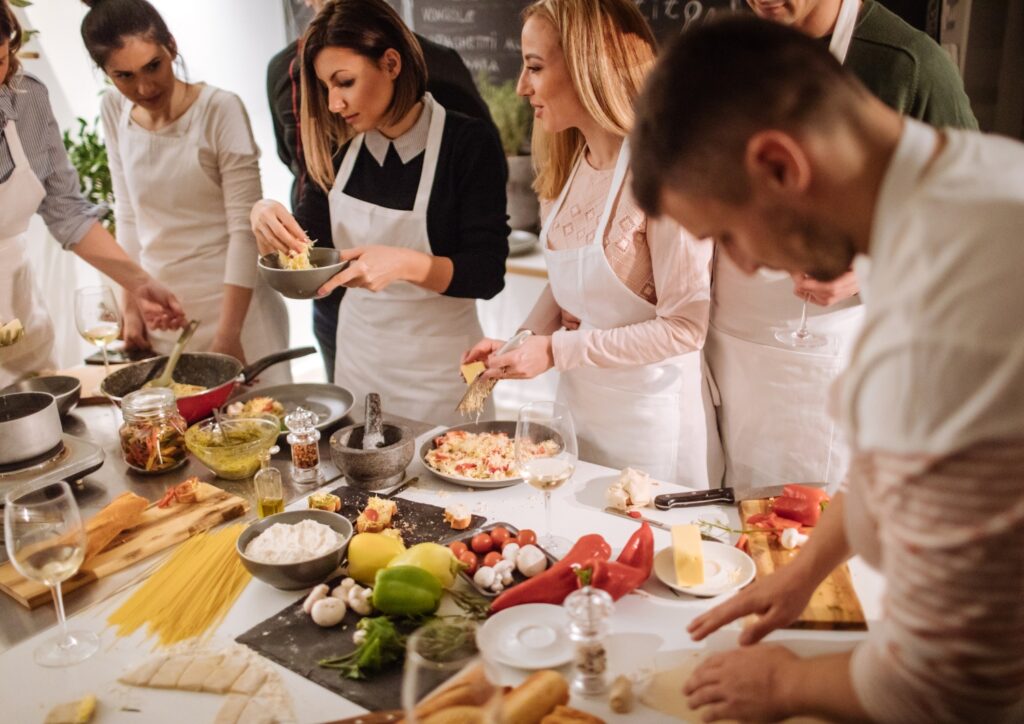
Harvard research confirms that brain-healthy foods, the same ones that protect your heart and blood vessels, include leafy greens, healthy fats like olive oil and colourful vegetables. Learning to prepare these foods yourself doubles the cognitive benefit.
Each successful dish is a small but meaningful victory. The satisfaction of transforming raw ingredients into a delicious meal builds confidence and mental resilience, and in retirement, when daily accomplishments can feel less frequent, those moments of achievement are incredibly rewarding.

2. Boosts physical health
Healthy eating matters even more as we age. A cooking class helps you make better choices, not just by teaching recipes but by teaching you about ingredients and their effect on your body.
- Learning to cook healthy: senior cooking classes often prioritise health-conscious meals low in sodium and rich in fibre and nutrients. Think a heart-healthy Mediterranean quinoa salad, a low-sugar berry chia pudding, or a high-fibre lentil soup.
- Portion control: cooking at home helps you manage portions and control salt, sugar and fat. Smaller plates, careful measuring and mindful serving sizes all help.
- Increased physical activity: cooking won’t replace your walks, but chopping, stirring, kneading and moving around the kitchen all contribute to staying active. Every bit helps maintain mobility and flexibility.
Cooking also encourages mindful eating. When you’ve prepared a meal yourself, you’re more likely to savour and appreciate it, which leads to healthier habits overall.
3. Social connections that matter
Retirement can feel isolating, especially without daily contact with workmates. A cooking class offers an excellent way to build meaningful social connections, which are essential for emotional wellbeing and happiness.
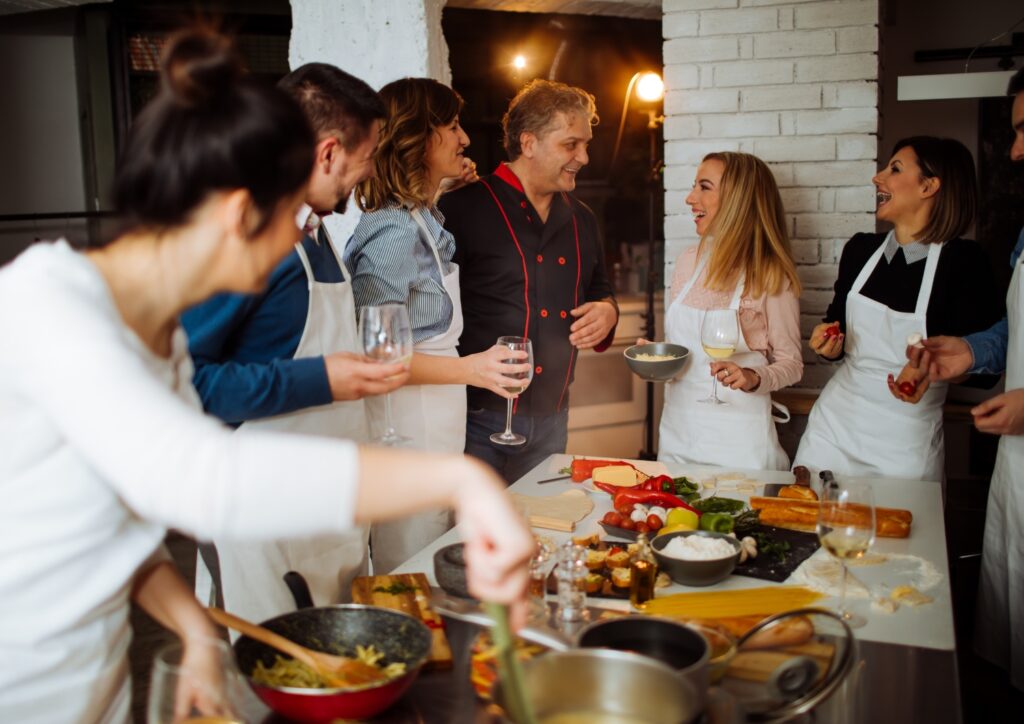
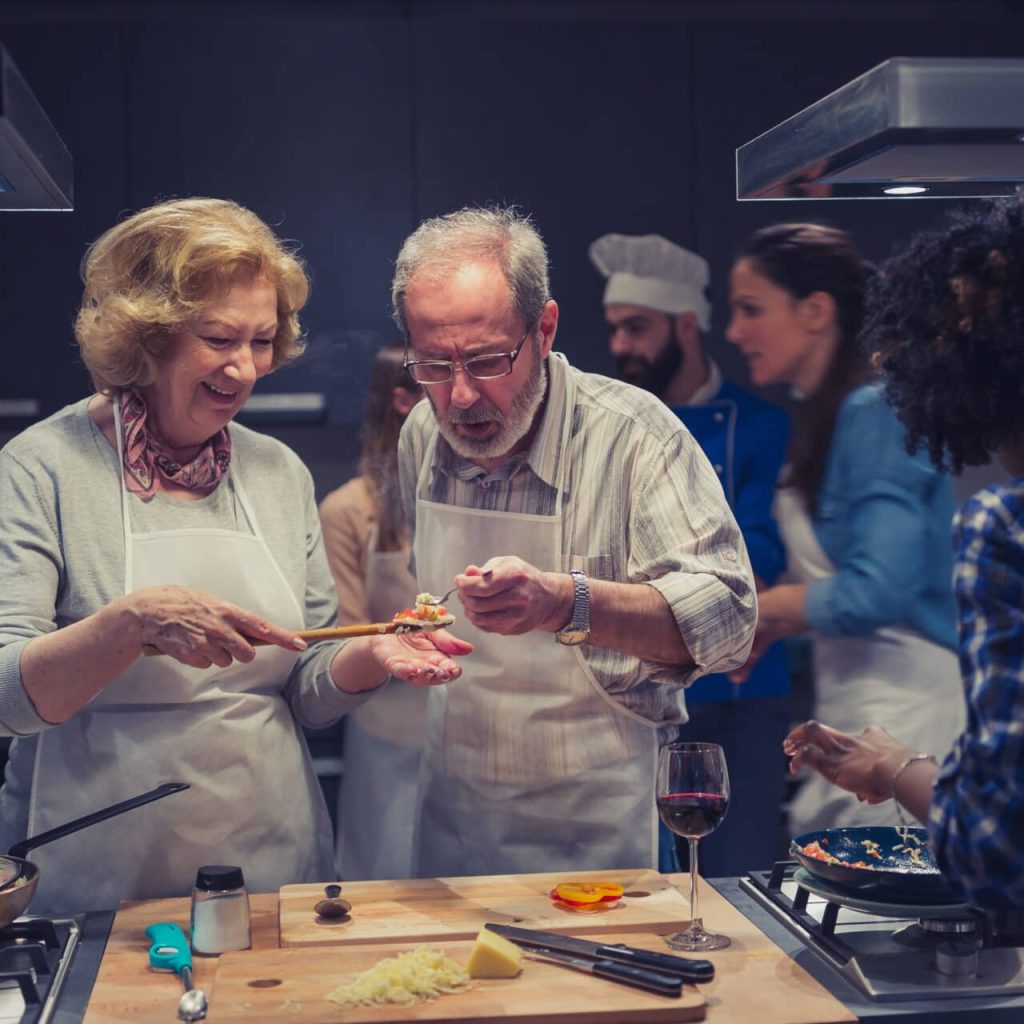
Shared interests. In a cooking class you’re surrounded by people who love food and learning, and that common ground creates instant connections: swapping family recipes, laughing over kitchen mishaps, sharing tips on the best local markets. These interactions create genuine friendships, not just casual acquaintances.
Teamwork. Many classes involve group activities: working with a partner on a complicated recipe or contributing to a multi-course meal. These collaborative efforts teach patience, trust and cooperation, and shared experiences create a supportive environment where everyone’s contribution is valued.
Lasting friendships. The connections made in a cooking class often extend far beyond the kitchen. Many participants go on to meet for meals, outings or future cooking adventures. A new friend can become your dining companion, recipe-swap partner, even your travel buddy on a food-themed trip.
The emotional benefit. Social interaction combats loneliness, a common issue among retirees. Feeling connected boosts emotional wellbeing and belonging, and a cooking class is a judgment-free zone where everyone is learning together.

4. Brings joy to everyday life
Retirement is the perfect time to rediscover simple joys, and cooking is one of the most fulfilling. A cooking class fills your days with sensory-rich experiences that bring happiness and purpose.
Therapeutic benefits. The repetitive actions of cooking, chopping vegetables, stirring a sauce, kneading dough, have a calming effect. Many people find these tasks meditative: worries fade and you feel fully present. In retirement, when stress and anxiety can still linger, that mindfulness is a genuine benefit.
A sense of accomplishment. Few activities reward you as immediately as cooking. Every dish is a testament to your effort and skill, and pulling a perfect cake from the oven or serving a flavourful stir-fry to your family is deeply satisfying. In a class, those moments are amplified because you’re sharing your triumphs with people who celebrate them.
Exploration and discovery. Every recipe is a doorway to a new culture, technique or flavour. One week you might make homemade pasta; the next, a classic French pastry. The variety keeps things interesting, and as your confidence grows you’ll find yourself tweaking recipes and trying new ingredients.
Engaging the senses. The sizzle of onions in a hot pan, the aroma of fresh herbs, the colours of seasonal produce, the first taste of a dish you made: cooking awakens the senses and brings joy to the present moment. These sensory connections evoke powerful memories and make each session feel like a special occasion.
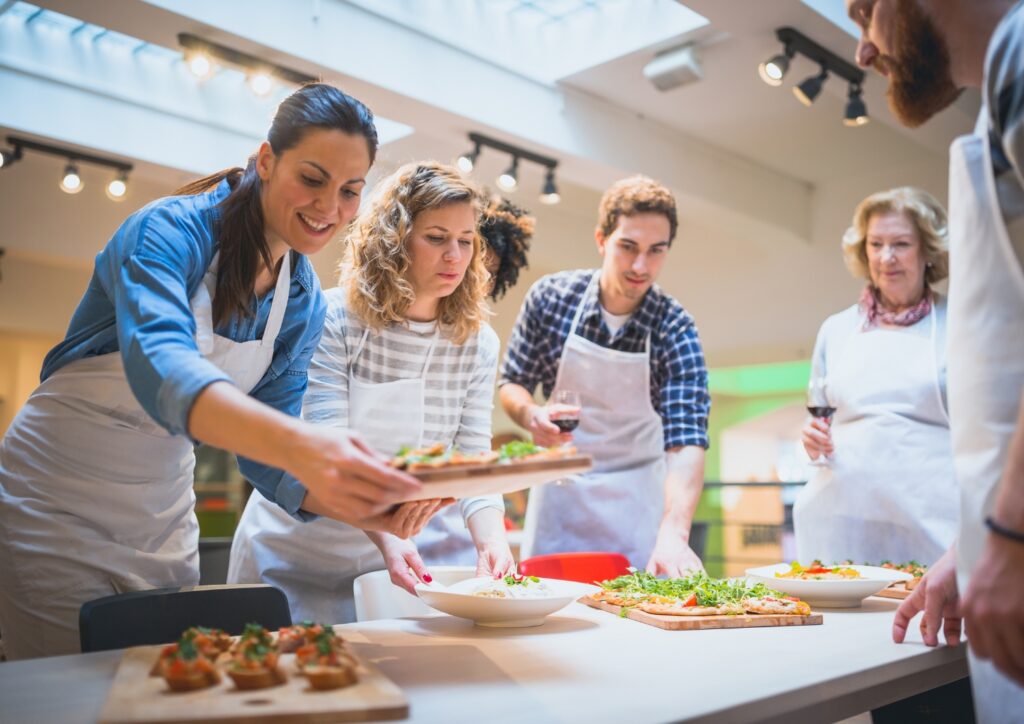
5. Gives you a new skill to share
Retirement is a time to give back and strengthen bonds with loved ones, and cooking is a skill made for sharing.
- Hosting gatherings: imagine a dinner party where you wow everyone with a dish you learned in class. Cooking gives you the confidence to entertain.
- Passing down knowledge: teaching the grandkids to make cookies, or sharing a family recipe with friends. Cooking is a skill meant to be shared.
- Building traditions: a weekly family dinner, or a signature dish for special occasions. New traditions start in the kitchen.
Food has a unique way of connecting people. When you share a meal, you’re not just feeding others; you’re creating memories and relationships that matter.
What to expect in a cooking class
Cooking classes are designed to be accessible and enjoyable. You don’t need to be a culinary expert to join. Most classes are beginner-friendly (instructors guide you through every step), hands-on (you practise techniques and prepare dishes yourself), and interactive (group activities and plenty of tasting).
Start your culinary adventure
Joining a cooking class is much more than learning to prepare food: it’s an investment in your cognitive health, physical wellbeing, social connections and overall happiness. Whether you want to sharpen your mind, boost your health, make new friends or simply find joy in creative expression, a cooking class can transform your retirement experience.
Ready to tie on that apron and start creating delicious memories?
Frequently asked questions
Do I need cooking experience to join?
Absolutely not. These classes are designed for all skill levels, from complete beginners to those expanding their repertoire. Instructors create supportive environments for learning at any level.
Are classes safe for seniors with mobility issues or dietary restrictions?
Reputable classes are designed with accessibility in mind, and instructors can accommodate various mobility needs and dietary restrictions. Discuss your needs when enrolling so appropriate adjustments can be made.
How much do classes cost?
Costs vary by location and program. Many community centres, senior centres and adult education programs offer affordable options, some subsidised or with sliding-scale fees. Private culinary schools charge more but often provide more comprehensive instruction.
What should I bring to my first class?
Most classes provide all equipment and ingredients. You’ll typically just need yourself, comfortable shoes, and perhaps an apron (many programs provide those too). Check with your specific program.
Can I take classes if I have arthritis or hand/wrist issues?
Yes. Many programs adapt techniques and provide ergonomic tools that are easier on arthritic hands. Instructors usually know modified techniques that make cooking more comfortable.
How long do classes run?
Formats vary from single-session workshops to multi-week programs. A popular format is 4-6 weeks, meeting once weekly for 2-3 hours, which allows skills to build progressively while friendships develop.
Will I take home what I cook?
Depends on the format. Some classes prepare and eat together; others let you take portions home. Many participants find sharing the meal together is the most enjoyable part.
Are there classes focused on healthy eating for seniors?
Yes. Many programs specifically address senior nutrition: heart-healthy, low-sodium and diabetic-friendly cooking, often with nutrition education alongside the cooking instruction.
References
- Harvard Health Publishing. “Foods linked to better brainpower.” April 3, 2024.
- ScienceDaily. “Food for thought: Study links key nutrients with slower brain aging.” May 2024.
- PMC. “Psychosocial Benefits of Cooking Interventions: A Systematic Review.“
- Polara Health. “The Importance of Community for Seniors.” June 3, 2024.