Personalised Health Tech: Your Body, Your Data, Your Call

Last Updated on September 10, 2026
Something worth paying attention to is happening in health. More people are keeping an eye on their wellbeing day to day, rather than waiting for a problem to announce itself.
Two things are driving it: wearable devices and artificial intelligence. Between them, they build a fuller picture of your body than any single appointment could, and they make sense of it as you go.
For readers in their late 50s and beyond, this matters in a very practical way. It is a straightforward path to staying active, staying informed, and staying firmly in charge of your own health.
None of it replaces your doctor. It simply hands you better information, so the conversations you have about your health start from a stronger footing.
Wearables have quietly grown up
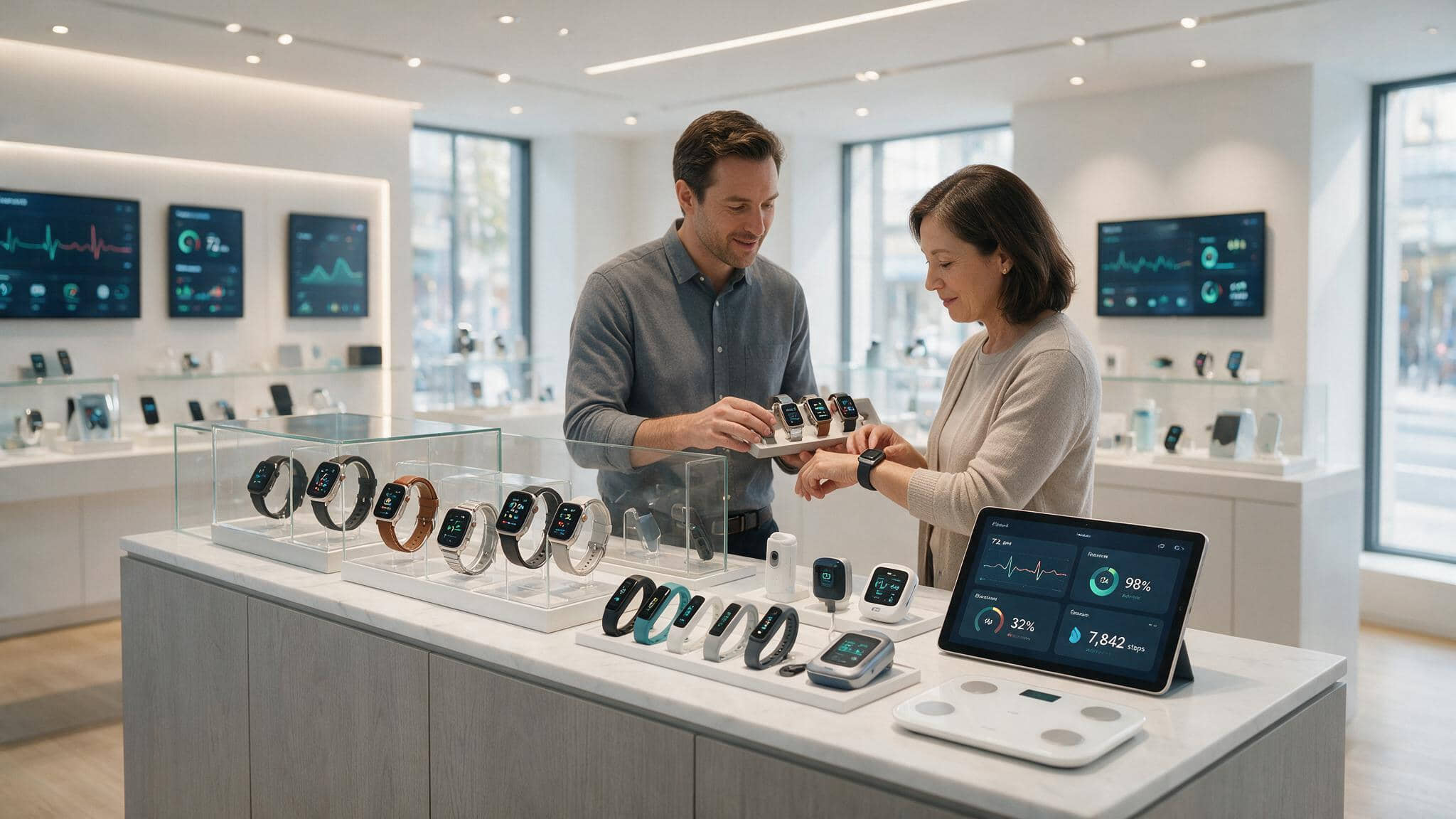
Today’s devices track far more than steps. Many now read heart rate, heart rhythm, blood oxygen, skin temperature, and sleep quality, all through the day without you thinking about it.
That shift is useful at this stage of life, because it turns vague feelings into something you can actually see. Poor sleep, an off day, a change in resting heart rate over a few weeks: patterns become visible instead of guessed at.
Accuracy has improved a great deal too. Consumer devices are closing the gap on clinical instruments, which means the readings are worth acting on rather than idly noting. Treat the exact figures as indicative and check anything that concerns you with a professional.
What artificial intelligence adds
AI does not just gather numbers, it learns from them. By reading patterns across thousands of measurements, it can flag something worth checking well before you would notice it yourself.
Heart rhythm is a clear example. Several watches can now spot signs of atrial fibrillation, an irregular rhythm that becomes more common with age and often carries no obvious symptoms. Catching it early gives you and your doctor a real head start.
The same pattern-spotting is showing up in sleep and breathing, in blood sugar trends, and in early nudges around recovery and stress. The point is not to hand your health to an algorithm, but to have a second set of eyes that never looks away.
Your genes and your medicine cabinet
This is where personalised health gets genuinely useful for many readers. Genomic testing can show how your body processes particular medications, an area known as pharmacogenomics.
If you take several medicines, and many people do by this stage, knowing how you metabolise them can help your doctor fine-tune doses and avoid combinations that suit you poorly. That is practical, everyday value, not science fiction.
Gut health sits alongside this. Research into the microbiome, the trillions of bacteria in your digestive system, is steadily linking it to immunity, mood, and how well you absorb nutrients. The science is still maturing, so treat bold claims with healthy caution.
Care that comes to you
Telehealth has moved from a stopgap to a genuine preference for a great many people. A video consultation can save a long drive, a full morning, and a waiting room, without losing the substance of the appointment.
Paired with a device that shares your recent readings, those consultations can be richer than expected. Your doctor can see how you have actually been, rather than relying on how you happen to feel on the day.
For anyone in a regional area, or simply managing a busy life, that convenience is hard to overstate. It also makes staying on top of ongoing conditions far less of a chore.
The questions worth asking first
None of this is free of trade-offs, and this audience is right to ask hard questions. The most important one is about your data: who owns it once you share it, where it is stored, and who might reach it later.
Before you sign up or swab, read the privacy terms properly. Look for clear controls over how your information is used, and the ability to delete it. Reputable providers make this easy to find, which is a good sign in itself.
The encouraging part is that protections are catching up. Privacy controls are clearer than they were, and lawmakers in several countries are strengthening the rules. The aim is for this technology to feel empowering rather than exposing, and you are entitled to hold providers to that.
Common questions
Is a smartwatch worth it if I already feel well?
Often, yes. Much of the value is in spotting quiet changes early, such as an irregular heart rhythm, that you would not feel day to day. Feeling well and being informed are not the same thing.
Will this replace my GP?
No, and it is not meant to. These tools give you and your doctor better information to work with. Any reading that worries you is a reason to book an appointment, not to self-diagnose.
How accurate are the readings really?
Good and improving, though not identical to clinical equipment. Use the trends over time rather than fixating on a single number, and confirm anything significant with a professional.
What about my privacy?
Read the terms before you start. Choose providers who explain clearly how your data is stored and used, and who let you delete it. If the fine print is vague, that is your answer.
Is it complicated to set up?
Less than you might expect. Most devices walk you through it step by step, and you can start with one feature, such as heart rate or sleep, and add more once you find your feet.
Where this leaves you
We are at a rare meeting point of biology and technology, and the opportunities are real. Personalised health is not about becoming obsessed with data or losing the human side of medicine.
It is about seeing your own body more clearly, so you can make better choices and have sharper conversations with the people who care for you. Whether you begin with a wearable, a health app, or a genomic test, the invitation is the same: take an active part in your own health. The tools to do it are finally within easy reach.