
The World Is Getting Older. Here’s What That Actually Means for Your Retirement


Last Updated on September 20, 2026
The world’s population is ageing, and governments everywhere are starting to talk about it in urgent terms. Japan’s former Prime Minister Fumio Kishida described his country as standing “on the verge of whether we can continue to function as a society.” That’s a striking thing for a head of government to say out loud.
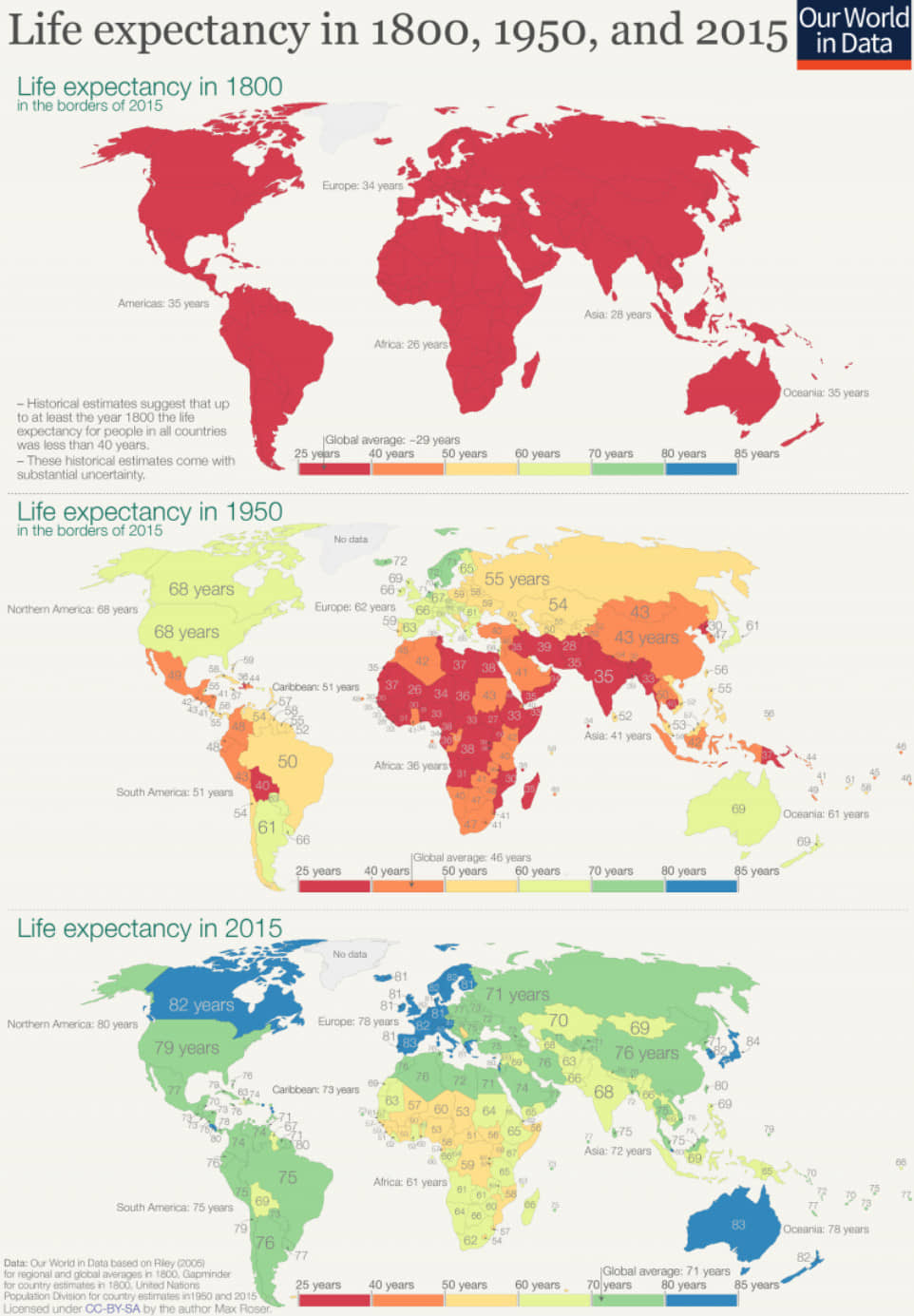
But here’s a perspective worth holding onto: the reason populations are ageing is that people are living longer, healthier lives. That’s not a crisis. That’s one of the great achievements of modern civilisation.
The economic pressures are real, and they’re worth understanding, because they’ll shape the pension, the workforce and the economy we all retire into. So let’s look at what’s actually driving the shift, what nations are doing about it, and what it means for you.
Two trends driving the shift
Demographers point to what they call a “double whammy”: life expectancy rising at the same time that birth rates fall.
Global life expectancy now sits at around 73 years, up from just 46 in 1950. Meanwhile, the average global fertility rate has dropped from five births per woman in 1950 to 2.3 in 2021. Fewer people entering the workforce, more people living well beyond traditional retirement age.
Professor Nicholas Barr, an economist at the London School of Economics, describes this as a trend playing out across almost every country, though particularly sharply in Japan and South Korea. As the share of the population above pension age grows, pressure mounts on the working-age population to keep the economy, and the tax base, moving.
Can immigration fill the gap?
One response several governments have turned to is targeted immigration. Canada recorded its largest-ever population growth in 2022, driven significantly by a deliberate migrant recruitment programme. Germany has since adopted a similar points-based system, making it easier for immigrants to have professional qualifications recognised and cutting the wait for citizenship from eight years to five.
Immigration helps, but experts are cautious about calling it a long-term fix. Professor Christian Dustmann, a migration economist at University College London, notes that immigrants tend to adjust their fertility rates to match the host population fairly quickly. That means a country would need to sustain ongoing large-scale immigration just to keep its working-age share steady.
For some countries, the numbers required would be substantial. It buys time, but it doesn’t resolve the underlying shift.
The retirement age debate
The more politically contentious option is raising the pension age. It’s the most direct lever available, and several governments have tried to pull it, not always successfully. France’s attempt to lift its pension age from 62 to 64 triggered mass protests in 2023; here at home, the Age Pension qualifying age has already crept from 65 to 67, and further reviews are likely as the arithmetic tightens.
Professor Barr points out that modern pension systems were largely designed for a world where people retired at 65 and lived another decade or so. That calculation has changed dramatically. He’s direct about where the blame lies: “It’s no secret that there’s a lot of older people, we’ve known this for 70-plus years. So it’s not as though there wasn’t decades of warning for governments to respond.”

The labour market will need to adapt alongside policy. Dustmann notes that some employers are already moving in that direction, including companies introducing grandparental leave, recognising that retaining experienced workers matters in a tight labour market.
Technology is already changing the picture
One factor that gets less attention than it deserves is how much the nature of work has already changed. Dustmann makes the point plainly: the physically demanding factory work that dominated employment in the 1970s has been largely taken over by automation.
“In the ’70s, we still had cars produced on long conveyor belts where workers were doing the same task over and over again. All that is done by robots now,” he says.
That shift matters enormously. Work that once wore bodies out has been replaced by roles that rely on judgement, communication, experience and expertise. Which, as it happens, are precisely the things people with decades of working life behind them tend to have in abundance.
What about having more babies?
The other lever is encouraging higher birth rates. Several governments have experimented with pro-natalist policies: financial incentives, subsidised childcare, and in the cases of Japan and China, state-sponsored dating services to help citizens meet partners.
The evidence for these policies is mixed, to put it kindly. Professor Barr is blunt: “I am not aware of any pro-natalist policy in any country that has ever worked.”
His reasoning is straightforward. The decision not to have children, or to have fewer, is driven by a complex mix of economic pressure, career aspirations, housing costs and shifting social expectations. A modest bump in child benefit doesn’t move that needle significantly.
The approach that does show more promise, according to Dustmann, is making it easier for women and mothers to participate in the workforce. Scandinavian countries, which have achieved relatively high female workforce participation, are ageing less rapidly than comparable nations. Unlocking that economic potential is both more effective and more equitable than trying to engineer birth rates.
A perspective worth keeping
It’s easy to read stories about ageing populations as a slow-motion alarm. But Professor Barr offers a more grounded take.
“What happens to population for the most part is beyond human control,” he says. “It’s the result of the decisions of billions of individuals and couples. So there’s no point in panicking.”
More importantly, the underlying cause of all this economic adjustment is that people are living longer, and in better health, than any previous generation in human history. Barr’s framing is worth sitting with: “Increased life expectancy is one of the great welfare triumphs of the 20th century. People are living longer, healthier lives. It’s a lovely problem to have.”
The economic systems will need to catch up. But the trend they’re adjusting to is, at its core, good news.